







Voltage Drops Are Falling on My Head: Operating Points, Linearization, Temperature Coefficients, and Thermal Runaway

Today’s topic was originally going to be called “Small Changes Caused by Various Things”, because I couldn’t think of a better title. Then I changed the title. This one’s not much better, though. Sorry.
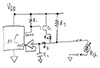
What I had in mind was the Shockley diode equation and some other vaguely related subjects.
My Teachers Lied to MeMy introductory circuits class in college included a section about diodes and transistors.
The ideal diode equation is...
Optimizing Optoisolators, and Other Stories of Making Do With Less
It’s been a few months since I’ve rolled up my sleeves here and dug into some good old circuit design issues. I started out with circuit design articles, and I’ve missed it.
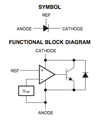
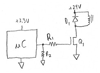
Today’s topic will be showing you some tricks for how to get more performance out of an optoisolator. These devices — and I’m tempted to be lazy and call them “optos”, but that sounds more like a cereal with Greek yogurt-covered raisins — are essentially just an LED...
Someday We’ll Find It, The Kelvin Connection
You’d think it wouldn’t be too hard to measure electrical resistance accurately. And it’s really not, at least according to wikiHow.com: you just follow these easy steps:
- Choose the item whose resistance you wish to measure.
- Plug the probes into the correct test sockets.
- Turn on the multimeter.
- Select the best testing range.
- Touch the multimeter probes to the item you wish to measure.
- Set the multimeter to a high voltage range after finishing the...
10 Items of Test Equipment You Should Know
When life gets rough and a circuit board is letting you down, it’s time to turn to test equipment. The obvious ones are multimeters and oscilloscopes and power supplies. But you know about those already, right?
Here are some you may not have heard of:
Non-contact current sensors. Oscilloscope probes measure voltage. When you need to measure current, you need a different approach. Especially at high voltages, where maintaining galvanic isolation is important for safety. The usual...
Specifying the Maximum Amplifier Noise When Driving an ADC

I recently learned an interesting rule of thumb regarding the use of an amplifier to drive the input of an analog to digital converter (ADC). The rule of thumb describes how to specify the maximum allowable noise power of the amplifier [1].
The Problem Here's the situation for an ADC whose maximum analog input voltage range is –VRef to +VRef. If we drive an ADC's analog input with an sine wave whose peak amplitude is VP = VRef, the ADC's output signal to noise ratio is maximized. We'll...
First-Order Systems: The Happy Family
Все счастли́вые се́мьи похо́жи друг на дру́га, ка́ждая несчастли́вая семья́ несчастли́ва по-сво́ему.— Лев Николаевич Толстой, Анна Каренина
Happy families are all alike; every unhappy family is unhappy in its own way.— Lev Nicholaevich Tolstoy, Anna Karenina
I was going to write an article about second-order systems, but then realized that it would be...
Lost Secrets of the H-Bridge, Part IV: DC Link Decoupling and Why Electrolytic Capacitors Are Not Enough
Those of you who read my earlier articles about H-bridges, and followed them closely, have noticed there's some unfinished business. Well, here it is. Just so you know, I've been nervous about writing the fourth (and hopefully final) part of this series for a while. Fourth installments after a hiatus can bring bad vibes. I mean, look what it did to George Lucas: now we have Star Wars Episode I: The Phantom Menace and
April is Oscilloscope Month: In Which We Discover Agilent Offers Us a Happy Deal and a Sad Name
Last month I wrote that March is Oscilloscope Month, because Agilent had a deal on the MSOX2000 and MSOX3000 series scopes offering higher bandwidth at lower prices. I got an MSOX3034 oscilloscope and saved my company $3500! (Or rather, I didn't save them anything, but I got a 350MHz scope at a 200MHz price.)
The scope included a free 30-day trial for each of the application software modules. I used my 30-day trial for the serial decode + triggering module, to help debug some UART...
March is Oscilloscope Month — and at Tim Scale!
I got my oscilloscope today.
Maybe that was a bit of an understatement; I'll have to resort to gratuitous typography:
I GOT MY OSCILLOSCOPE TODAY!!!!Those of you who are reading this blog may remember I made a post about two years ago about searching for the right oscilloscope for me. Since then, I changed jobs and have been getting situated in the world of applications engineering, working on motor control projects. I've been gradually working to fill in gaps in the infrastructure...
Efficiency Through the Looking-Glass
If you've ever designed or purchased a power supply, chances are you have had to work with efficiency calculations. I can remember in my beginning electronic circuits course in college, in the last lecture when the professor was talking about switching power converters, and saying how all of a sudden you could take a linear regulator that was 40% efficient and turn it into a switching regulator that was 80% efficient. I think that was the nail in the coffin for any plans I had to pursue a...
Two jobs

For those of you following closely embeddedrelated and the other related sites, you might have noticed that I have been less active for the last couple of months, and I will use this blog post to explain why. The main reason is that I got myself involved into a project that ended up using a better part of my cpu than I originally thought it would.
edit - video of the event:
I currently have two jobs: one as an electrical/dsp engineer recycled as a web publisher and the other...
Linear Feedback Shift Registers for the Uninitiated, Part II: libgf2 and Primitive Polynomials
Last time, we looked at the basics of LFSRs and finite fields formed by the quotient ring \( GF(2)[x]/p(x) \).
LFSRs can be described by a list of binary coefficients, sometimes referred as the polynomial, since they correspond directly to the characteristic polynomial of the quotient ring.
Today we’re going to look at how to perform certain practical calculations in these finite fields. I maintain a Python library called libgf2,...
The Other Kind of Bypass Capacitor
There’s a type of bypass capacitor I’d like to talk about today.
It’s not the usual power supply bypass capacitor, aka decoupling capacitor, which is used to provide local charge storage to an integrated circuit, so that the high-frequency supply currents to the IC can bypass (hence the name) all the series resistance and inductance from the power supply. This reduces the noise on a DC voltage supply. I’ve...
Byte and Switch (Part 2)
In part 1 we talked about the use of a MOSFET for a power switch. Here's a different circuit that also uses a MOSFET, this time as a switch for signals:
We have a thermistor Rth that is located somewhere in an assembly, that connects to a circuit board. This acts as a variable resistor that changes with temperature. If we use it in a voltage divider, the midpoint of the voltage divider has a voltage that depends on temperature. Resistors R3 and R4 form our reference resistance; when...
Lost Secrets of the H-Bridge, Part II: Ripple Current in the DC Link Capacitor
In my last post, I talked about ripple current in inductive loads.
One of the assumptions we made was that the DC link was, in fact, a DC voltage source. In reality that's an approximation; no DC voltage source is perfect, and current flow will alter the DC link voltage. To analyze this, we need to go back and look at how much current actually is being drawn from the DC link. Below is an example. This is the same kind of graph as last time, except we added two...
Isolated Sigma-Delta Modulators, Rah Rah Rah!
I recently faced a little "asterisk" problem, which looks like it can be solved with some interesting ICs.
I needed to plan out some test instrumentation to capture voltage and current information over a short period of time. Nothing too fancy, 10 or 20kHz sampling rate, about a half-dozen channels sampled simultaneously or near simultaneously, for maybe 5 or 10 seconds.
Here's the "asterisk": Oh, by the way, because the system in question was tied to the AC mains, I needed some...
The Least Interesting Circuit in the World
It does nothing, most of the time.
It cannot compute pi. It won’t oscillate. It doesn’t light up.
Often it makes other circuits stop working.
It is… the least interesting circuit in the world.
What is it?
About 25 years ago, I took a digital computer architecture course, and we were each given use of an ugly briefcase containing a bunch of solderless breadboards and a power supply and switches and LEDs — and a bunch of
Basic hand tools for electronics assembly

Though the software tools vary with different microcontrollers, many hardware tools are the same.
Two Capacitors Are Better Than One
I was looking for a good reference for some ADC-driving circuits, and ran across this diagram in Walt Jung’s Op-Amp Applications Handbook:
And I smiled to myself, because I immediately remembered a circuit I hadn’t used for years. Years! But it’s something you should file away in your bag of tricks.
Take a look at the RC-RC circuit formed by R1, R2, C1, and C2. It’s basically a stacked RC low-pass filter. The question is, why are there two capacitors?
I...
Stairway to Thévenin
This article was inspired by a recent post on reddit asking for help on Thévenin and Norton equivalent circuits.
(With apologies to Mr. Thévenin, the rest of the e's that follow will remain unaccented.)
I still remember my introductory circuits class on the subject, roughly as follows:
(NOTE: Do not get scared of what you see in the rest of this section. We're going to point out the traditional approach for teaching linear equivalent circuits first. If you have...
How precise is my measurement?

Some might argue that measurement is a blend of skepticism and faith. While time constraints might make you lean toward faith, some healthy engineering skepticism should bring you back to statistics. This article reviews some practical statistics that can help you satisfy one common question posed by skeptical engineers: “How precise is my measurement?” As we’ll see, by understanding how to answer it, you gain a degree of control over your measurement time.
An accurate, precise...Welcoming MANY New Bloggers!
The response to the latest call for bloggers has been amazing and I am very grateful.
In this post I present to you the individuals who, so far (I am still receiving applications at an impressive rate and will update this page as more bloggers are added), have been given access to the blogging interface. I am very pleased with the positive response and I think the near future will see the publication of many great articles, given the quality of the...
SEGGER's 25th Anniversary Video
Chances are you will find this video more interesting to watch if you take five minutes to first read the story of the week I spent at SEGGER's headquarters at the end of June.
The video is only a little more than 2 minutes long. If you decide to watch it, make sure to go full screen and I would really love to read your thoughts about it in the comments down bellow. Do you think a video like this succeeds in making the viewer want to learn more about the company?...
Feedback Controllers - Making Hardware with Firmware. Part I. Introduction
Introduction to the topic
This is the 1st in a series of articles looking at how we can use DSP and Feedback Control Sciences along with some mixed-signal electronics and number-crunching capability (e.g. FPGA), to create arbitrary (within reason) Electrical/Electronic Circuits with real-world connectivity. Of equal importance will be the evaluation of the functionality and performance of a practical design made from modestly-priced state of the art devices.
- Part 1:
Specifying the Maximum Amplifier Noise When Driving an ADC
I recently learned an interesting rule of thumb regarding the use of an amplifier to drive the input of an analog to digital converter (ADC). The rule of thumb describes how to specify the maximum allowable noise power of the amplifier [1].
The Problem Here's the situation for an ADC whose maximum analog input voltage range is –VRef to +VRef. If we drive an ADC's analog input with an sine wave whose peak amplitude is VP = VRef, the ADC's output signal to noise ratio is maximized. We'll...
Going back to Germany!
A couple of blog posts ago, I wrote that the decision to go to ESC Boston ended up being a great one for many different reasons. I came back from the conference energized and really happy that I went.
These feelings were amplified a few days after my return when I received an email from Rolf Segger, the founder of SEGGER Microcontroller (check out their very new website), asking if I would be interested in visiting their headquarters...
Who else is going to Sensors Expo in San Jose? Looking for roommate(s)!
This will be my first time attending this show and I must say that I am excited. I am bringing with me my cameras and other video equipment with the intention to capture as much footage as possible and produce a (hopefully) fun to watch 'highlights' video. I will also try to film as many demos as possible and share them with you.
I enjoy going to shows like this one as it gives me the opportunity to get out of my home-office (from where I manage and run the *Related sites) and actually...
3 Good News
Good News #1Last week, I announced a new and ambitious reward program that will be funded by the new Vendors Directory.
This week, I am happy to announce that we have our firsts two sponsors! Quantum Leaps & Abelon Systems have agreed to pay the sponsorship fee to be listed in the new Vendors Directory. Because of their support, there is now some money in the reward pool ($1,000) and enough to pay for the firsts 500 'beers' awarded. Please...
Live Streaming from Embedded World!
For those of you who won't be attending Embedded World this year, I will try to be your eyes and ears by video streaming live from the show floor.
I am not talking improvised streaming from a phone, but real, high quality HD streaming with a high-end camera and a device that will bond three internet connections (one wifi and two cellular) to ensure a steady, and hopefully reliable, stream. All this to hopefully give those of you who cannot be there in person a virtual...
Feedback Controllers - Making Hardware with Firmware. Part 9. Closing the low-latency loop
It's time to put together the DSP and feedback control sciences, the evaluation electronics, the Intel Cyclone floating-point FPGA algorithms and the built-in control loop test-bed and evaluate some example designs. We will be counting the nanoseconds and looking for textbook performance in the creation of emulated hardware circuits. Along the way, there is a printed circuit board (PCB) issue to solve using DSP.
Fig 1. The evaluation platform
Additional design...